Cleaning masks, helmets and harnesses
After a fire, the mask, helmet and breathing-apparatus harness are as contaminated as the turnout gear. A washer cleans them reliably and spares the person doing it from contact with soot.
The manufacturer's instructions always apply for the mask, helmet, breathing apparatus and washer. The procedures on this page are based on practice and on the technical data sheets of cleaning products. They are not results of independent studies. Laundering turnout gear is covered on the Laundering PPE page.
Why a washer rather than hand washing
Masks and helmets can be washed by hand, but scrubbing by hand means direct contact with soot and combustion products. A washer designed for firefighting gear gives the same result every time and above all reduces the exposure of whoever does the cleaning. So after disassembly, put the parts straight into the washer and finish by hand only the washed parts, and only when necessary.
Tested in an ordinary dishwasher. We tested the procedures on this page in an ordinary household dishwasher with Deconta Automatic+, and the results were surprisingly good. A dishwasher is therefore a good and inexpensive solution, especially for volunteer fire brigades. Always check that the mask or helmet manufacturer allows it, though, and never wash dishes in the same machine. Field experience
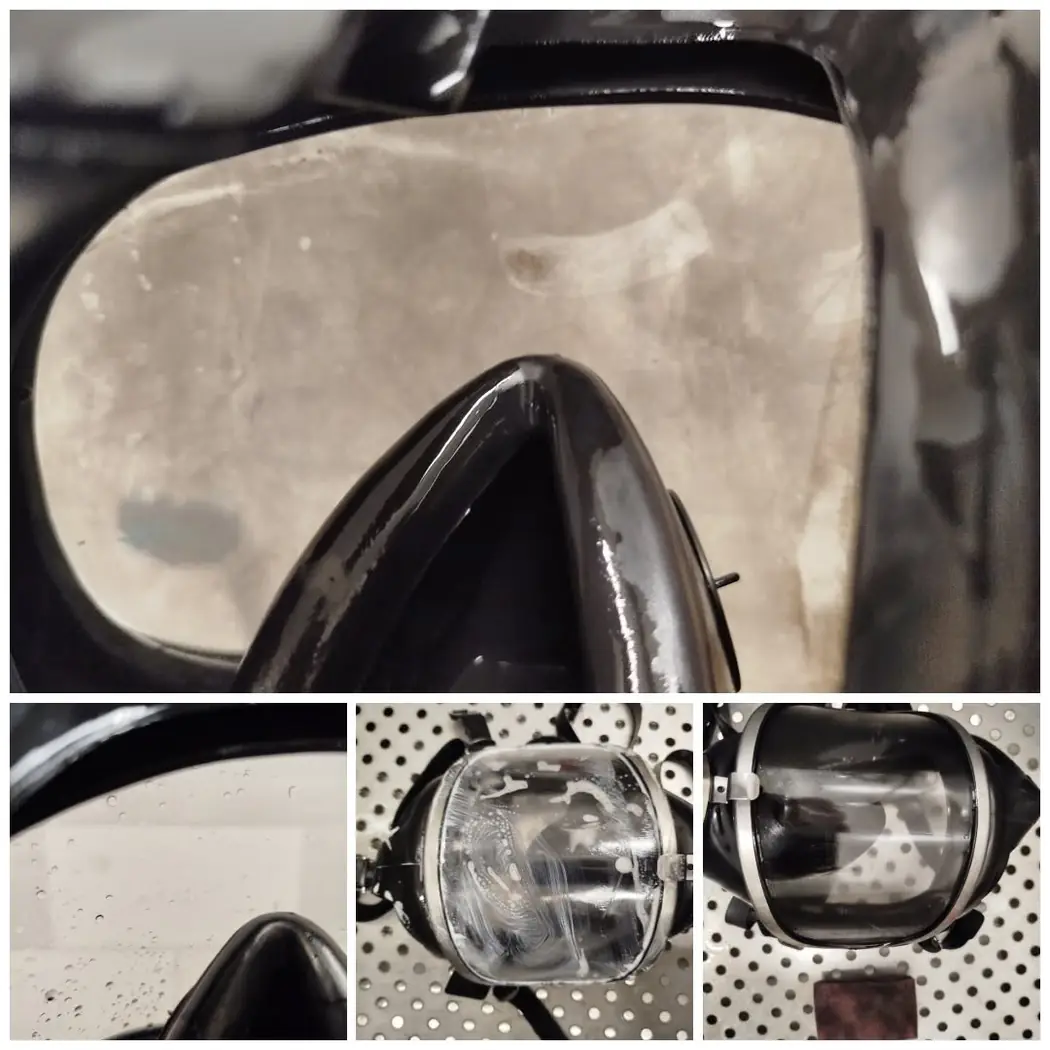
Masks
Remove the exhalation valve and other parts according to the manufacturer's instructions.
Helmets
Remove electronics (torches, communications) unless they are waterproof.
BA harnesses
Remove the cylinder and the demand valve. If the washer cannot take the whole harness, also remove the pneumatic part.
Washer procedure
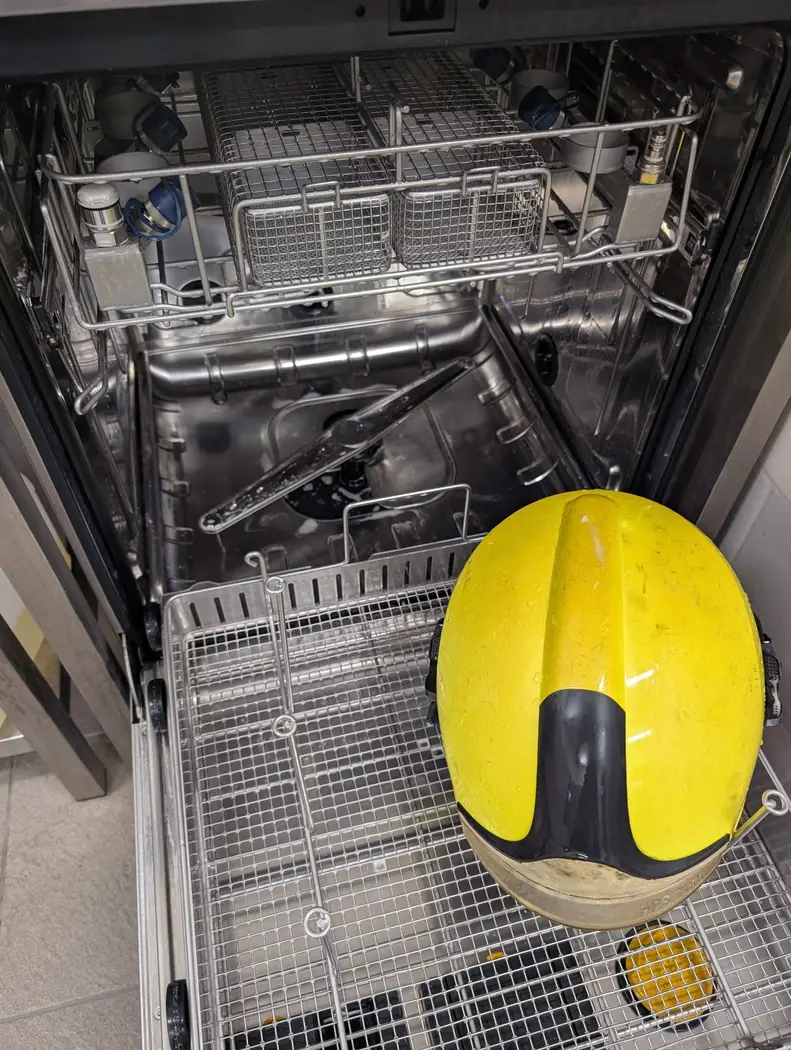
- No manual pre-cleaning, straight into the washer. After disassembly, just briefly check the parts for visible damage and place them in the designated baskets and holders so that they are stable and water reaches all surfaces. Don't overload the washer.
- Detergent and programme. A low-foaming detergent for PPE equipment in the dispenser, a programme for the type of equipment, temperature as specified by the manufacturer, usually up to 60 °C. The parts must be free of residues of other, foaming cleaners, otherwise the washer will over-foam.
- Final rinse. A cold rinse, optionally with a neutralising agent. This is usually added directly into the washer chamber, not into the dispenser.
- Only after washing: touch-up cleaning, only if needed. If any soiling remains after the cycle, clean it by hand and rinse with clean water. Product residues must be removed, especially from the inner parts of masks, the airways and the textile parts of the helmet. Disinfect where needed.
- Drying. In open air or in a drying cabinet, away from direct heat and sunlight.
- Reassembly and function test. Before returning to service, carry out a full test according to the manufacturer, for example mask seal and breathing apparatus function.
Safety when handling concentrates. Technical cleaning concentrates can cause serious eye damage and allergic skin reactions. Wear protective gloves and eye protection when diluting and dosing. If it gets in your eyes, rinse with water and call a poison control centre. Whoever launders and washes gear after a fire should also wear protective equipment because of the combustion products, see Station decon.